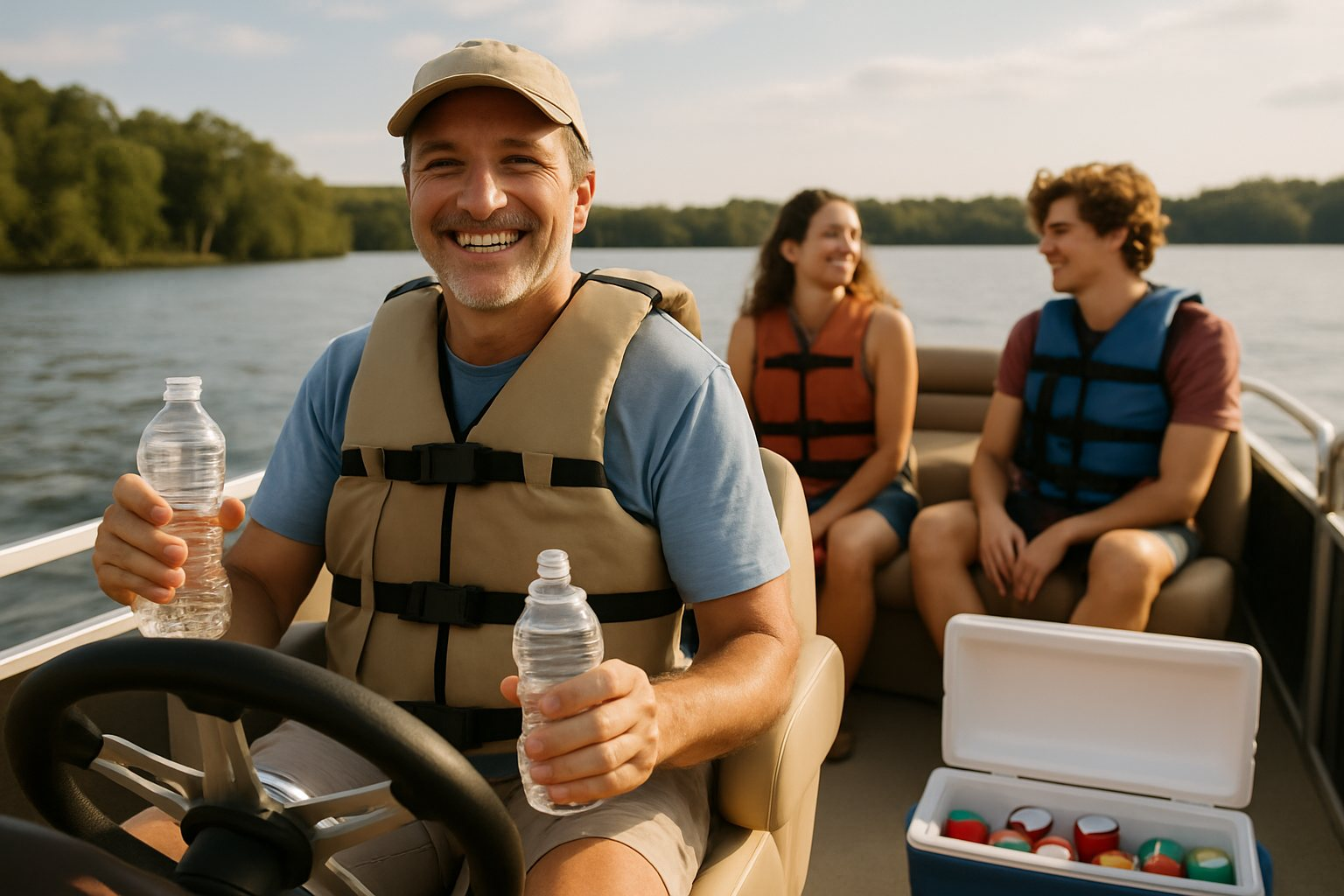
A raft-up on the Fourth of July: twelve boats tied together, a cooler on every deck, kids going down the slide off the biggest pontoon. Everyone’s having a great time until it’s time to untie and drive home in the dusk through a crowded channel. Boating under the influence (BUI) is illegal in every state and under federal law, and the Coast Guard’s statistics put alcohol at the top of the list of known causes of fatal boating incidents. Here’s what the rules say, why the water makes alcohol hit harder, and how to plan a party day that ends well.
In short: under federal rules (33 CFR 95), the operator of a recreational boat is under the influence with a blood alcohol concentration of 0.08% or more, or at any level when impairment is apparent from their behavior. The Coast Guard says BUI is illegal in every state, and state laws, limits and penalties vary. Alcohol was the leading known contributing factor in fatal boating incidents in 2024. Plan a sober operator and a sober Water Watcher before the cooler opens.
Boating under the influence: the federal standard
The federal rule is 33 CFR 95.020. A person is under the influence of alcohol or a dangerous drug when:
| Who | Federal standard |
|---|---|
| Operator of a recreational vessel | Blood alcohol concentration of 0.08% or more |
| Operator or crew of a vessel other than a recreational vessel (commercial) | Alcohol concentration of 0.04% or more |
| Anyone operating any vessel | Impairment apparent by observation (manner, speech, coordination, behavior), at any level |
On a recreational boat, “operating” means having an essential role in running the boat underway, such as navigating or controlling the engines. The rule covers drugs as well as alcohol, and the Coast Guard notes that whether a substance is legal doesn’t change the penalties.
The Coast Guard’s federal requirements guide says an operator at 0.08 (0.10 in some states) or higher faces a civil penalty of up to $1,000, a criminal penalty of up to $5,000, or one year in prison, or both. The Coast Guard can also end the voyage, bring the boat to its mooring with a sober person, and hand the operator to state or local officers.
State laws vary
The federal rule says it doesn’t pre-empt state BUI laws. In waters overseen only by a state, the state enforces its own statute; in waters also under federal jurisdiction, both apply, and the Coast Guard will usually ask state officers to take an impaired operator into custody. State penalties can include arrest, fines, jail and, in some states, loss of driving privileges.
One example: Florida’s BUI law (s. 327.35) uses a 0.08 blood or breath alcohol level, or impairment of normal faculties, and sets a fine of $500 to $1,000 and up to 6 months in jail for a first conviction, with tougher penalties for repeat offenses. That’s one state, not a model for others. For yours, check your state’s boating agency in the NASBLA directory. This page explains the rules; it isn’t legal advice.
Why alcohol hits harder on the water
The Coast Guard says a boat operator is likely to become impaired more quickly than a driver, drink for drink. Its reasons:
- Stressors: motion, vibration, engine noise, sun, wind and spray speed up impairment and fatigue.
- Less practice: boaters average only 110 hours on the water a year, so they’re less experienced than on the road.
- Vision: reduced peripheral vision, depth perception and night vision, and difficulty telling red from green, the colors of navigation lights.
- Balance and the inner ear: a person who falls in may not be able to tell up from down.
- False warmth: alcohol can keep a person in cold water from getting out before hypothermia sets in.
The Coast Guard estimates that an operator with a blood alcohol concentration above 0.10% is more than 10 times as likely to die in a boating accident as one with none, and that in boating deaths involving alcohol, over half the victims capsized and/or fell overboard. It says there is no safe threshold for drinking and operating a boat.
What the 2024 numbers say
In the Coast Guard’s Recreational Boating Statistics 2024, alcohol use was the leading known contributing factor in fatal boating incidents: where the primary cause was known, it was the leading factor in 20% of deaths. Alcohol use was the primary factor in 244 incidents with 92 deaths and 192 injuries in 2024.
Passengers, swimmers and slide riders
BUI law is about the operator, but the Coast Guard warns that intoxicated passengers are also at risk of injury and falls overboard. The CDC says to avoid alcohol before or during swimming and boating, and not to drink while supervising children. On a slide day, that means a sober operator, a sober Water Watcher, and riders who can climb the steps, slide feet first and swim back to the ladder. See swimming from a boat and kids on boats.
Plan the party, not the excuse
- Choose the sober operator before you leave the dock.
- Bring plenty of water, soft drinks and food, and keep the trip a reasonable length to avoid fatigue (Coast Guard tips).
- Hold the party ashore, at the dock or back home, with time before anyone drives a boat or a car.
- If you drink with a meal ashore, the Coast Guard suggests waiting at least an hour per drink before operating.
- If you see a drunk boater, the Coast Guard says call 911 or hail it on VHF channel 16.
BUI questions
What is the legal alcohol limit for driving a boat?
The federal standard for recreational operators is a BAC of 0.08% or more, or apparent impairment at any level. The Coast Guard notes some states use 0.10. Check your state’s law.
Can passengers drink on a boat?
The federal BUI rule applies to the operator. Open-container and passenger rules are set by states and local authorities, so check yours. The Coast Guard warns that intoxicated passengers face a higher risk of injury and falling overboard.
Does BUI apply to kayaks and paddleboards?
The Coast Guard says its federal BUI law applies to all boats, from canoes and rowboats to the largest ships. Whether a state treats a paddleboard as a vessel is up to that state.
Is boating under the influence a federal crime?
The Coast Guard describes it as a federal and state offense, with federal civil and criminal penalties. States also prosecute under their own laws.
Back to the boat safety hub, or read boater education and state rules.