This article contains affiliate links: if you buy through them we may earn a commission, at no extra cost to you. Read our affiliate disclosure.
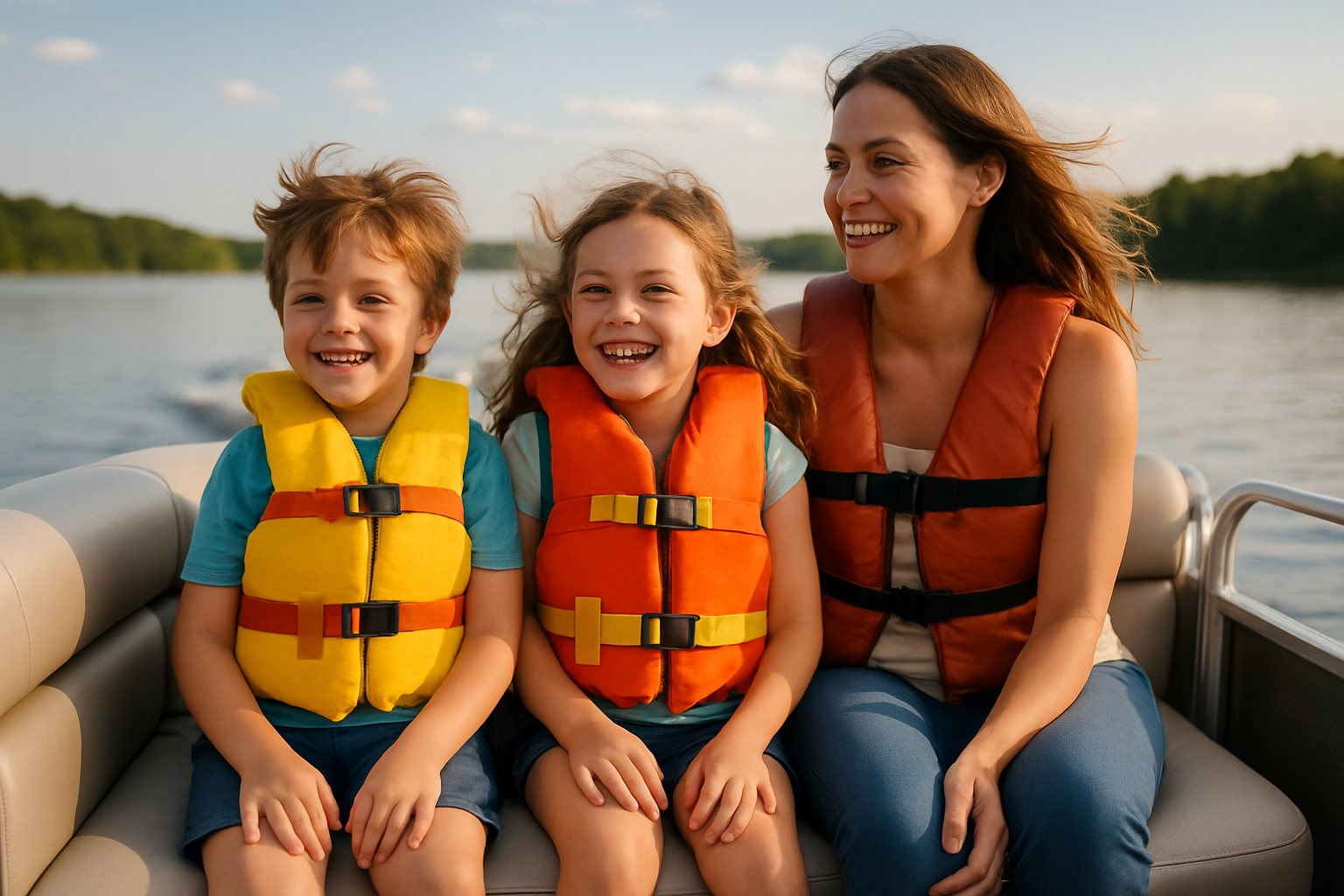
Grandpa’s pontoon, three cousins, a bag of snacks and a slide they’ve been asking about since breakfast. Family boat days are where kids fall in love with the water, and the adults’ job is to make sure the only thing they remember is the fun. Boating with kids safely isn’t complicated: the right life jacket, an adult who never stops watching, an engine that’s off when anyone is in the water, and a few slide rules that every child learns before the first turn.
In short: fit each child with a U.S. Coast Guard approved life jacket chosen by their weight. Federal rules require children under 13 to wear it while the boat is underway (unless below deck or in an enclosed cabin), and your state may set a different age. Name one adult whose only job is watching the water, keep kids away from the stern while engines or a generator run, and on the slide: one rider at a time, feet first, with a spotter. No slide maker publishes an age limit.
Why boating with kids needs a plan
The CDC’s drowning facts (page updated January 2026) say more children ages 1 to 4 die from drowning than from any other cause, and that drowning is the second leading cause of unintentional injury death for children 5 to 14, after motor vehicle crashes. It also reports an average of 4,083 unintentional drowning deaths a year in the U.S. from 2012 to 2021. For boating specifically, the CDC cites the Coast Guard’s count of 658 boating-related deaths in 2021, of which 81% were drownings and 83% of the people who died were not wearing a life jacket.
The CDC also notes that drowning can happen quickly and quietly. That’s why supervision comes first on this page.
Boating with kids: supervision
- One responsible adult watches, closely and constantly, whenever children are in or near the water (CDC). The Coast Guard calls this person the Water Watcher.
- Swap the watcher rather than letting attention drift; the job is watching, not phones or drinks.
- No alcohol for the supervising adult. The CDC says not to drink alcohol while supervising children.
- Swim lessons help, but don’t replace watching. The CDC says formal swimming lessons can reduce drowning risk, and that children who have had lessons still need close and constant supervision.
- Learn CPR. The CDC notes that your CPR skills could save a life in the time it takes paramedics to arrive.
Life jackets for children
Buy by weight, not age. The Coast Guard’s sizes are Infant (33 lb or less), Child (over 33 to 55 lb) and Youth (over 55 to 88 lb), and it warns that adult sizes may not work for children. A foam jacket that fits is snug and doesn’t ride up above the chin or ears; try it in the water near the boat. Inflatable life jackets come in adult sizes only and aren’t for weak or non-swimmers.
The law: federal rules require children under 13 to wear an appropriate Coast Guard approved life jacket while the boat is underway, unless they’re below deck or in an enclosed cabin. Where a state has its own child-wear law, the state rule applies instead. Florida, for example, requires children under 6 to wear one on boats under 26 ft while underway; Minnesota sets the age at under 10. Check your state’s boating agency through the NASBLA directory, and see life jackets on boats for labels and fit. The CDC’s advice is simpler: wear a life jacket whenever on a boat, and don’t rely on air-filled or foam toys, which aren’t safety devices.
Around the boat: engines, stern and swim platform
- Engines off before anyone swims. The Coast Guard says it’s the best and safest action when people are in the water near your boat. In 2024 it recorded 169 incidents where someone was struck by a propeller, with 30 deaths.
- No one on the swim platform with engines or the generator running. The Coast Guard warns carbon monoxide collects there. See carbon monoxide on boats.
- Kids sit in seats, not on the bow, gunwales or transom while underway. Florida’s boating course law, for example, lists riding on seat backs, gunwales, the transom or the bow among the dangers every course must teach.
Slide rules for young riders
No boat slide maker we checked publishes a minimum age. What they publish are rules, and they apply to every rider. From RAVE’s and Lakesurf’s manuals:
- Adult supervision: RAVE says “mature, knowledgeable adult supervision”; Lakesurf says “strict adult supervision”.
- A Coast Guard approved Type III life jacket on every rider.
- One person on the slide at a time, sliding or climbing.
- Feet first and seated; never head first, never jump from the top.
- Wait until the water at the bottom is clear of swimmers; never play under the slide.
- Climb back aboard by the ladder, not up the slide.
Add a spotter: an adult in the boat whose only job is watching the landing zone, plus the Water Watcher if others are swimming. Check the depth against your slide’s manual on water depth and clearance. Our full guide to kids and boat slides covers steps, handles and choosing a family slide.
Family checklist
| Before you leave the dock | At the swim stop |
|---|---|
| A life jacket for each child, checked against their weight | Anchored, engines and generator off |
| Your state’s child life jacket age known | Water Watcher named and sober |
| Forecast checked for thunderstorms | Depth checked for the slide |
| Sunscreen, water and shade | One rider, feet first, ladder back aboard |
Prices change; these are what we saw on Amazon in October 2026. Match the label’s user weight to your child.
Airhead Treasure Child Life Jacket
- USCG approved Type III
- Child 33 to 55 lb
- About $27
Aqua Oceans 7 Kids Life Jacket
- USCG approved
- Child 33 to 55 lb
- About $38
Boating with kids questions
At what age can a child stop wearing a life jacket on a boat?
Under the federal rule, children under 13 must wear one while underway unless below deck or in an enclosed cabin. States can set a different age (Florida under 6 on boats under 26 ft, Minnesota under 10), so check yours. The CDC recommends wearing one whenever on a boat.
Is there a minimum age for a boat slide?
No maker we checked publishes one. They require adult supervision, a Type III life jacket and one rider at a time, feet first.
Can a baby go on a boat?
The Coast Guard approves Infant life jackets for users 33 lb or less. Check the label’s weight range and the fit, and test it in calm water. Your state’s rules for young children apply.
Are swim floaties OK instead of a life jacket?
No. The CDC says not to rely on air-filled or foam toys because they aren’t safety devices. Use a Coast Guard approved life jacket.
Who should watch the kids on a boat?
One sober adult, named before the swim stop, whose only job is watching the water. Take turns so attention stays sharp.
Back to the boat safety hub. Related: swimming from a boat, weather and water conditions and family boating with a slide.